Bosch P9 Fuel Injection Pump Repair, Overhaul and Calibration
Specialist Workshop for Mechanical Bosch P9 Inline Fuel Injection Pumps
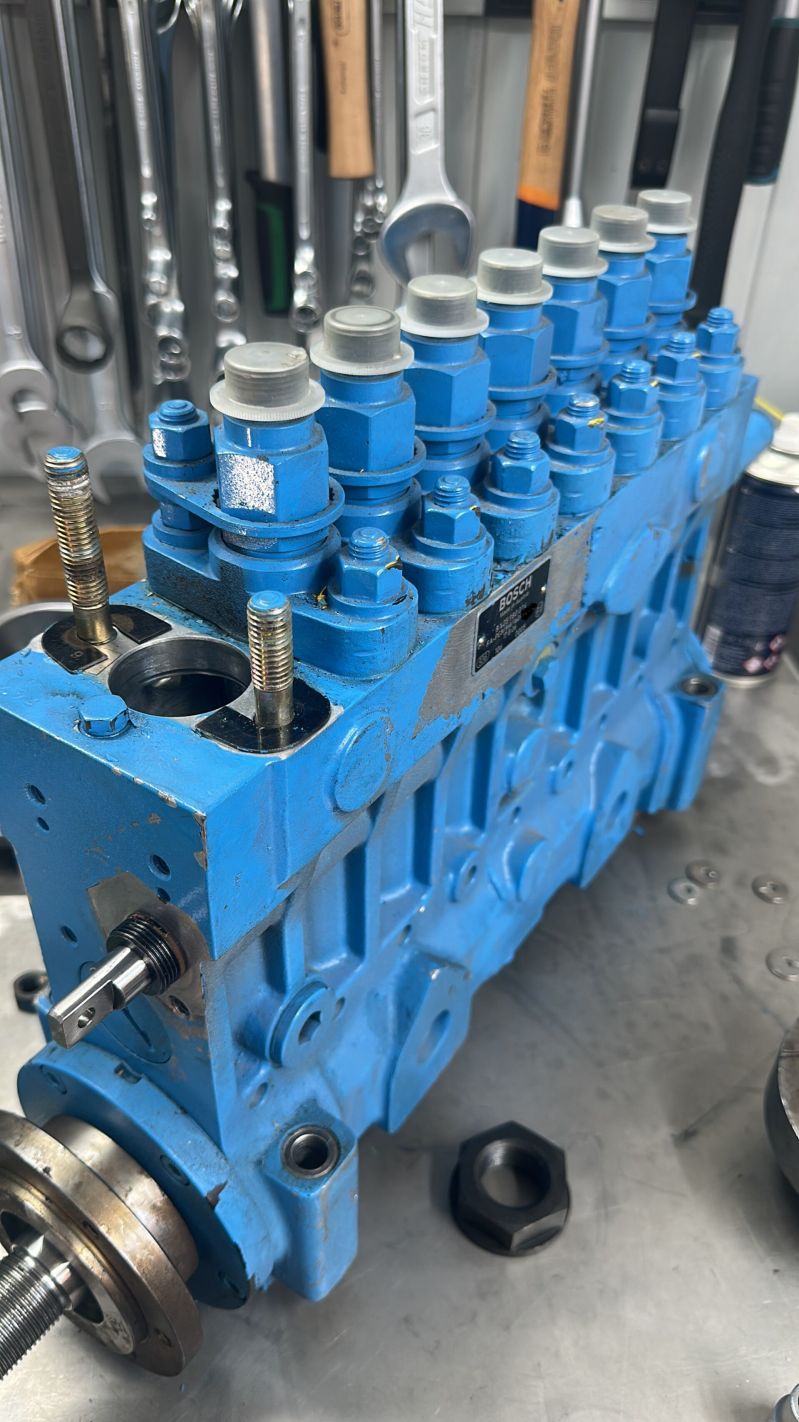
Einspritzpumpen Manufaktur NRW is an independent specialist workshop in Germany providing professional repair, overhaul, testing and calibration of mechanical Bosch P9 inline fuel injection pumps.
Bosch P9 injection pumps are used in high-output marine, industrial, power-generation and stationary diesel engines. Their precise mechanical operation and uniform fuel delivery have a direct influence on engine output, fuel consumption, combustion quality, exhaust-gas temperatures and operational reliability.
A professional Bosch P9 fuel injection pump overhaul involves considerably more than replacing seals or repairing an external fuel leak. It requires complete dismantling, controlled cleaning, dimensional inspection of all functional components, replacement or reproduction of worn parts, precise reassembly and final calibration on a suitable fuel injection pump test bench.
Our workshop is specifically equipped for this work.
Based in North Rhine-Westphalia, Germany – supporting engine operators, industrial companies, marine businesses and specialist workshops throughout Europe and worldwide.
Request a Bosch P9 Pump Assessment
Please send us photographs of the complete injection pump, the nameplate, all visible part numbers and the corresponding engine information.
Contact Our Bosch P9 Specialists
Professional Bosch P9 Fuel Injection Pump Overhaul
Bosch P9 inline injection pumps are heavily loaded precision assemblies designed for large diesel engines.
Every pump section must deliver a precisely defined quantity of fuel under different engine-speed and load conditions. Even comparatively small deviations between individual pump sections can result in unequal combustion conditions across the engine.
Possible consequences include:
- uneven engine operation
- unequal cylinder output
- increased fuel consumption
- reduced engine performance
- starting problems
- excessive exhaust-gas temperature on individual cylinders
- smoke formation
- fuel leakage
- irregular fuel delivery
- increased thermal loading
- increased mechanical loading
- and reduced engine service life
A reliable overhaul therefore requires a systematic inspection of the complete injection pump rather than the replacement of isolated components.
Our Bosch P9 services include:
- technical pump identification
- incoming inspection and documentation
- complete dismantling
- multi-stage component cleaning
- precision measurement
- inspection of all mechanical pump components
- assessment of plunger-and-barrel assemblies
- camshaft and tappet inspection
- bearing and housing inspection
- repair or replacement of worn components
- reverse engineering of obsolete parts
- professional reassembly
- mechanical basic adjustment
- test-bench operation
- fuel-delivery calibration
- comparison of all pump sections
- leakage testing
- and final functional inspection
Each injection pump is evaluated individually according to its Bosch type designation, Bosch part number, engine-manufacturer reference, engine application and technical condition.
Bosch P9 Pump Types
Bosch FA-PE8/9M Inline Injection Pumps
Frequently requested Bosch P9 pump types include:
- FA-PE8/9M/160/100/LV
- FA-PE8/9M/180/100S24
These examples represent only a limited selection of the Bosch P9 pump versions that may be submitted for technical assessment.
Different P9 pumps may vary in:
- number of pump sections
- direction of rotation
- plunger-and-barrel design
- fuel-delivery specification
- camshaft design
- cam profile
- drive arrangement
- actuating mechanism
- mounting configuration
- engine output
- rated engine speed
- engine application
- and technical production status
A Bosch P9 pump cannot therefore be identified reliably by its external appearance alone.
The complete information shown on the nameplate is essential for a binding technical assessment.
Alternative Bosch P9 Type-Number Formats
Historical technical documentation, spare-parts catalogues, databases and online listings frequently use different formatting for the same Bosch pump designation.
The Bosch type designation:
FA-PE8/9M/160/100/LV
may also appear as:
- FA PE8/9M/160/100/LV
- FA PE8 9M 160 100 LV
- FA-PE8-9M-160-100-LV
- FAPE89M160100LV
The Bosch designation:
FA-PE8/9M/180/100S24
may also appear as:
- FA PE8/9M/180/100S24
- FA PE8 9M 180 100 S24
- FA-PE8-9M-180-100S24
- FAPE89M180100S24
Regardless of how the number is written, we assess whether the relevant Bosch P9 injection pump can be identified, overhauled and calibrated.
A binding identification is always based on the original nameplate, pump construction, associated engine and available technical data.
Bosch P9 Part Numbers
Bosch P9 inline fuel injection pumps may also be identified by their Bosch original part numbers.
Frequently requested Bosch P9 references include:
- B 405 980 021
- B 405 980 022
- B 405 980 023
- B 405 980 024
The same numbers may be written without spaces:
- B405980021
- B405980022
- B405980023
- B405980024
They may also appear with hyphens:
- B-405-980-021
- B-405-980-022
- B-405-980-023
- B-405-980-024
If you are searching for a repair or overhaul of a Bosch B 405 980 024, Bosch B405980024 or another P9 injection pump, please send us the complete identification details before shipping the unit.
The Bosch part number is an important starting point, but it may not be sufficient on its own. The final identification also considers the complete pump designation, engine-manufacturer references, direction of rotation and engine data.
MWM and Deutz Reference Numbers
Bosch P9 fuel injection pumps may additionally be listed under MWM or Deutz original equipment references.
Frequently requested MWM and Deutz numbers associated with these large-engine injection systems include:
- 12305948
- 12305950
- 12306782
- 12306784
- 12305942
- 12305944
Depending on the documentation or search format, these numbers may also be written as:
- 1230 5948
- 1230-5948
- 1230 5950
- 1230-5950
- 1230 6782
- 1230-6782
- 1230 6784
- 1230-6784
- 1230 5942
- 1230-5942
- 1230 5944
- 1230-5944
These references are included to assist with technical identification and online searches.
They should not be interpreted as automatic one-to-one cross-references. A binding pump assignment requires the original Bosch nameplate, the complete engine designation and confirmation of the relevant technical configuration.
Applications of Bosch P9 Injection Pumps
Bosch P9 inline fuel injection pumps are used primarily in high-output medium and large diesel engines.
Typical applications include:
- marine propulsion engines
- marine main engines
- marine auxiliary engines
- industrial diesel engines
- generator sets
- emergency power systems
- stationary power-generation engines
- power-station installations
- railway locomotives
- pump drives
- compressor drives
- mining machinery
- heavy-duty industrial equipment
- and other continuously operated diesel installations
Mechanical injection pumps of this type are found in the environment of engines manufactured by companies including:
- MWM
- Deutz
- MTU
- MAN
- Wärtsilä
- Cummins
- and other manufacturers of industrial and marine diesel engines
The specific pump version always depends on the engine model, number of cylinders, rated output, rated engine speed and application.
The engine-manufacturer name alone is therefore not sufficient for correct pump identification.
Why Bosch P9 Overhaul Requires Specialist Knowledge
Bosch P9 pumps combine large fuel-delivery components with precise mechanical control and timing.
Their individual pump sections must operate uniformly despite high mechanical loading and long operating periods. Wear may occur gradually and may not always be visible during an external inspection.
Relevant components include:
- plunger-and-barrel assemblies
- pump plungers
- pump barrels
- delivery valves
- camshaft
- cam profiles
- roller tappets
- tappet rollers
- bearings
- bushes
- shafts
- springs
- actuating components
- adjustment mechanisms
- sealing surfaces
- housing bores
- and component fits
Wear or dimensional deviation in any of these areas may influence fuel delivery, repeatability and cylinder-to-cylinder uniformity.
This is why a professional repair cannot be based solely on visual inspection.
The pump must be dismantled, cleaned, measured and evaluated as a complete precision assembly.
Our Bosch P9 Overhaul Process
1. Incoming Inspection and Pump Identification
Before dismantling, we document the Bosch P9 injection pump in the condition in which it arrives.
We record:
- Bosch pump type
- Bosch part number
- MWM, Deutz, MTU or other manufacturer references
- direction of rotation
- drive configuration
- number of pump sections
- visible damage
- corrosion
- fuel or oil leakage
- missing components
- previous repair work
- and information about the associated engine
Clear photographs of the pump and its nameplate should therefore be supplied before shipping whenever possible.
2. Controlled Dismantling
The injection pump is dismantled professionally into its individual components and functional assemblies.
Existing component positions, mechanical relationships and relevant basic settings are documented during dismantling.
The required level of disassembly depends on:
- pump design
- technical condition
- type of damage
- previous repair work
- and intended overhaul scope
3. Multi-Stage Cleaning
After dismantling, the housing, mechanical components and fuel-delivery parts are cleaned using suitable workshop processes.
The cleaning procedure removes:
- old lubricating oil
- diesel-fuel residue
- deposits
- contamination
- corrosion products
- and particles caused by wear
Reliable dimensional and visual inspection is only possible once the relevant components are thoroughly clean.
4. Visual Inspection and Precision Measurement
The cleaned components are inspected and measured individually.
Depending on the pump version, the inspection may include:
- plunger-and-barrel assemblies
- delivery valves
- camshaft
- individual cam profiles
- roller tappets
- tappet rollers
- bearings
- bushes
- shafts
- springs
- control components
- actuating mechanisms
- adjustment mechanisms
- sealing surfaces
- housing bores
- and mechanical fits
Components are reused only when their technical condition and dimensional accuracy permit reliable continued operation.
5. Repair or Replacement of Worn Components
Worn, corroded or damaged components are replaced or professionally reconditioned where technically permissible.
Required parts may include:
- pump elements
- plunger-and-barrel assemblies
- delivery valves
- bearings
- bushes
- tappet rollers
- roller bearings
- needle bearings
- shaft seals
- O-rings
- flat gaskets
- springs
- connection components
- and pump-specific mechanical parts
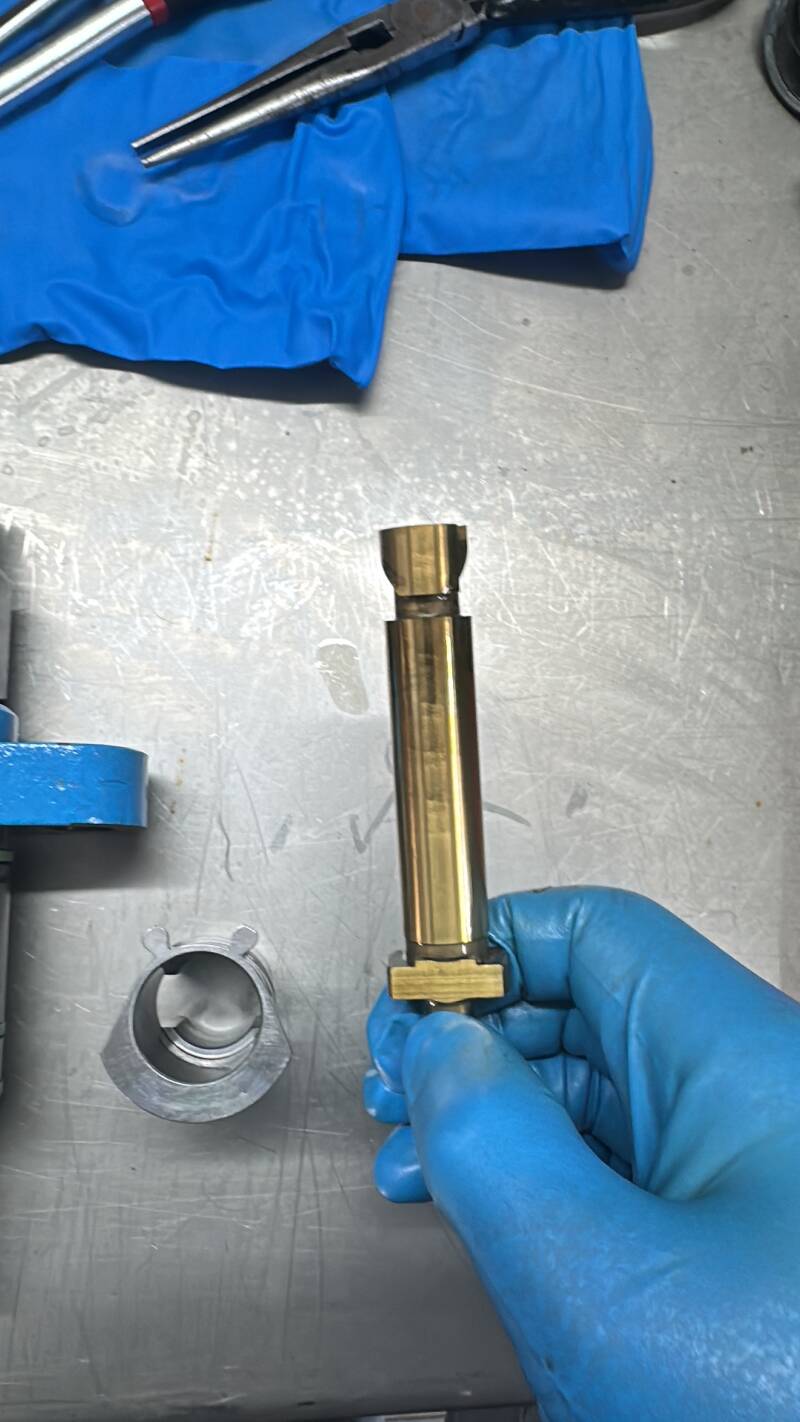
Where suitable original parts are no longer available, we assess whether the component can be restored or reproduced through reverse engineering.
6. Precision Reassembly
Once all components have been inspected and the required repair work has been completed, the Bosch P9 pump is reassembled under controlled workshop conditions.
During assembly, we check:
- component orientation
- mechanical clearances
- bearing positions
- movement of all operating mechanisms
- interaction between the pump sections
- sealing surfaces
- and the relevant basic mechanical settings
Correct assembly is essential before meaningful test-bench calibration can begin.
7. Test-Bench Operation and Calibration
Following reassembly, the injection pump is operated and calibrated on a suitable fuel injection pump test bench.
Depending on the pump version and the available technical specifications, testing may include:
- fuel delivery from every pump section
- comparison of individual delivery quantities
- uniformity across all cylinders
- delivery behaviour at different pump speeds
- repeatability of measured values
- mechanical actuation
- operation of adjustment mechanisms
- leakage testing
- shut-off behaviour where applicable
- and calibration according to available Bosch or engine-manufacturer specifications
The pump is released only after its mechanical operation and relevant delivery values have been verified.
Test-Bench Calibration for Large Bosch P9 Pumps
Accurate test-bench calibration is an essential part of every professional Bosch P9 overhaul.
Uniform fuel delivery affects:
- cylinder balance
- engine output
- fuel consumption
- combustion quality
- exhaust-gas temperatures
- smooth engine operation
- component loading
- operational reliability
- and engine service life
Our workshop operates specialised test equipment for mechanical inline fuel injection pumps.
Our standard large-pump test-bench capability includes inline pumps with up to twelve pump sections.
For particularly large injection systems, we also operate a specially designed 16-cylinder fuel injection pump test bench.
Its technical configuration includes:
- an extended pump bed
- increased rotating mass
- a high-capacity drive system
- mounting capability for large inline fuel injection pumps
- and testing of complete tandem pump assemblies
The test-bench configuration enables large mechanical injection systems to be evaluated in a manner appropriate to their design and application.
Tandem Injection Pump Testing and Synchronisation
Some V16 diesel engines use two mechanically coupled fuel injection pumps operating together as one tandem system.
In these applications, testing each pump separately does not completely verify how both pumps operate when mechanically connected.
Where the pump design, mounting arrangement and available technical data permit, the two pumps can:
- be inspected and calibrated individually,
- be installed as a complete tandem assembly,
- be operated together on the 16-cylinder test bench,
- and be synchronised as one injection system.
Correct tandem synchronisation is important for:
- uniform fuel delivery to all cylinders
- minimum cylinder-to-cylinder deviation
- balanced engine output
- uniform exhaust-gas temperatures
- smooth engine operation
- reliable load acceptance
- and long-term operational reliability
Please send photographs and technical information before shipping a tandem assembly so that the mounting and testing requirements can be assessed in advance.
Reverse Engineering of Obsolete Bosch P9 Components
The supply of original spare parts for many historical Bosch P9 fuel injection pumps is now limited.
Numerous components have been discontinued by the original manufacturers even though the associated industrial, marine and power-generation engines remain in active service.
An unavailable individual part does not necessarily mean that the complete injection pump is beyond repair.
Where technically and economically feasible, an existing original component can be:
- precisely measured
- dimensionally documented
- assessed according to its function
- reconstructed in CAD
- specified for suitable material properties
- manufactured by specialised European production partners
- dimensionally inspected
- and tested before installation
Depending on the component, the reverse-engineering process considers:
- dimensional accuracy
- tolerances
- fits
- material specification
- hardness
- heat treatment
- surface finish
- mechanical loading
- wear behaviour
- lubrication conditions
- and long-term operational reliability
The feasibility of reproduction is assessed individually for each component.
Safety-critical and highly loaded components are manufactured only where their technical function, material requirements and quality-control criteria can be defined sufficiently.
Bosch P9 Spare Parts and Component Support
Our own stock contains a growing range of wear parts and replacement components for historical mechanical fuel injection pumps.
Depending on the Bosch P9 version, required components may include:
- pump elements
- plunger-and-barrel assemblies
- delivery valves
- bearings
- bushes
- rollers
- roller tappets
- seals
- shaft seals
- O-rings
- springs
- actuating components
- connection parts
- housing components
- and specially reproduced replacement parts
Components that are not immediately available may be:
- sourced from existing stock
- professionally reconditioned
- repaired where technically permissible
- or reproduced through reverse engineering
Own stock and access to specialised European manufacturing capabilities help reduce unnecessary downtime, particularly for marine, industrial and power-generation applications.
Typical Reasons for a Bosch P9 Pump Assessment
A Bosch P9 injection pump should be inspected when symptoms or operating data indicate possible irregular fuel delivery or mechanical wear.
Typical reasons for an assessment include:
- visible fuel or oil leakage
- corrosion after extended storage
- seized or restricted mechanical movement
- unequal exhaust-gas temperatures
- uneven engine operation
- reduced engine output
- poor starting behaviour
- excessive smoke
- irregular fuel delivery
- contamination of the fuel system
- damage following water ingress
- extended periods out of service
- unknown previous repair work
- or overhaul of the corresponding engine
These symptoms do not automatically prove that the injection pump is the sole cause of the problem.
The complete fuel system, injectors, engine condition and available operating data should also be considered during fault diagnosis.
International Bosch P9 Repair Service
Einspritzpumpen Manufaktur NRW is based in North Rhine-Westphalia, Germany.
We receive enquiries from:
- engine operators
- shipping companies
- power-generation businesses
- industrial companies
- engine rebuilders
- service companies
- spare-parts specialists
- and diesel-injection workshops
Bosch P9 pumps and individual components can be sent to our workshop from other European countries and international locations by prior arrangement.
Before shipping, please provide the available pump and engine information. This allows us to determine:
- whether the pump can be accepted
- which documentation is required
- whether special transport precautions are necessary
- whether a complete tandem assembly is involved
- and which technical information is still missing
Please do not dismantle or unnecessarily clean the pump before contacting us.
Its original condition may provide important evidence of leakage, corrosion, contamination, wear or previous mechanical intervention.
Frequently Asked Questions About Bosch P9 Injection Pumps
Do you repair Bosch P9 fuel injection pumps?
Yes. Bosch P9 inline fuel injection pumps are one of our principal specialist areas.
We provide technical identification, complete dismantling, component inspection, precision measurement, repair, reassembly and test-bench calibration.
Can you overhaul a Bosch FA-PE8/9M/160/100/LV?
Pumps with the designation FA-PE8/9M/160/100/LV can be submitted for individual technical assessment.
The possible overhaul scope depends on the exact pump version, technical condition, available calibration data and availability or reproducibility of the required components.
Can you repair a Bosch B 405 980 024 injection pump?
Bosch P9 pumps carrying part numbers such as B 405 980 024 can be assessed for repair and overhaul.
Please provide the complete Bosch type designation, nameplate photograph, engine details and pictures of the complete pump before shipping.
Is a Bosch P9 overhaul more than a seal replacement?
Yes.
Replacing gaskets and seals may correct an external leak, but it does not assess the condition of the pump elements, camshaft, tappets, rollers, bearings, delivery valves or other functional components.
A complete overhaul includes dismantling, cleaning, dimensional inspection, repair, reassembly and test-bench calibration.
Is every Bosch P9 pump calibrated after overhaul?
A mechanically overhauled pump must be operated and calibrated on suitable test equipment before returning to service.
The exact procedure depends on the pump design and available technical specifications.
Can obsolete Bosch P9 parts be reproduced?
Many discontinued components can be measured, technically reconstructed and reproduced where their function, material specification and manufacturing requirements can be defined reliably.
The technical and commercial feasibility is assessed separately for each component.
Is the Bosch part number sufficient for pump identification?
Not always.
The Bosch part number is an important reference, but a reliable identification also requires:
- a clear photograph of the complete nameplate
- photographs of the pump
- the exact engine model
- the number of cylinders
- rated output
- rated engine speed
- direction of rotation where known
- and the application of the engine
Do you also assess Bosch P9 variants not listed on this page?
Yes.
The types and part numbers listed on this page represent only a selection. Other Bosch P9 pump versions can also be submitted for technical assessment.
Can international customers send Bosch P9 pumps to Germany?
Yes, by prior arrangement.
Please contact us with the identification details and photographs before shipping the pump.
Request a Bosch P9 Fuel Injection Pump Assessment
For an initial technical evaluation, please provide as much of the following information as possible:
- clear photograph of the complete nameplate
- complete Bosch pump type
- Bosch part number
- available MWM, Deutz, MTU or other manufacturer references
- engine manufacturer
- exact engine designation
- number of cylinders
- rated engine output
- rated engine speed
- direction of rotation, if known
- marine, industrial or power-generation application
- photographs of the complete injection pump from several angles
- description of the fault
- information about previous repairs
- period of storage, if applicable
- and any available spare-parts or calibration documentation
A final quotation normally requires dismantling and technical inspection because the internal condition of a Bosch P9 pump cannot be assessed reliably from photographs alone.
After reviewing the information, we will provide an initial technical assessment and advise you on the next steps.
Contact Our Bosch P9 Fuel Injection Pump Workshop
Name *
Company
Country
Email Address *
Telephone Number
Engine Manufacturer and Model
Bosch Pump Type
Bosch Part Number
Description of the Fault *
Upload Nameplate and Pump Photographs
Submit Technical Enquiry
Einspritzpumpen Manufaktur NRW
Specialist for Bosch P9 Inline Fuel Injection Pumps
Professional:
- Bosch P9 fuel injection pump repair
- Bosch P9 fuel injection pump overhaul
- Bosch P9 test-bench calibration
- Bosch P9 spare-parts support
- reverse engineering of obsolete pump components
- and testing of large tandem injection-pump systems
For marine, industrial, power-generation and stationary diesel engines.
Request a Bosch P9 Repair Assessment