
Marine Fuel Injection Case Studies
Documented Workshop Projects from Mechanical Large-Diesel Injection Systems
For technical buyers, shipyards and engine specialists, a real project often provides more useful evidence than a general service description. This page presents documented workshop work and explains the technical problem, the repair route and the test method without claiming results that have not been verified on the completed engine installation.
Our marine service is not limited to one pump manufacturer or one engine family. Depending on pump design, condition, technical documentation, spare-parts availability and suitable test-bench adaptation, we assess, overhaul, repair and calibrate mechanical fuel injection pumps from Bosch, LÓrange (also searched as L'Orange), Kugelfischer and other manufacturers. We accept enquiries for mechanical fuel-injection equipment used on all categories of marine engines operating either at fixed speed or across a variable speed range, including main propulsion, auxiliary, generator and other shipboard duties. Common Rail systems are not part of this service scope.
Case Study: MWM / Deutz TBD620 V16 - Two Bosch P10 Pumps as One Injection System
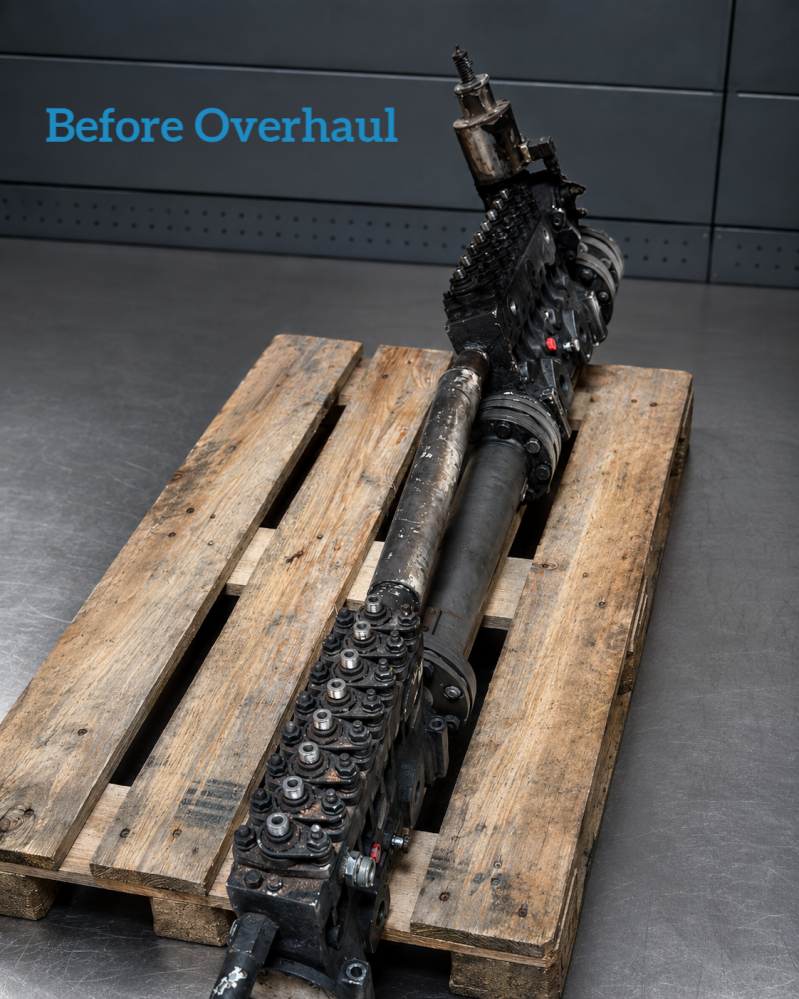
A V16 TBD620 application used two Bosch P10 inline injection pumps that had to function as one coordinated 16-cylinder fuel-injection system. Treating each pump as an unrelated eight-cylinder unit would not have been sufficient for final system verification.
Initial Technical Objective
The objective was to restore both pumps mechanically, calibrate each pump using verified technical data and then compare the two pumps together in the coupled system. The technical basis included original Bosch test information together with engine acceptance data available for the project.
Mechanical Findings and Rebuild Scope
The overhaul required replacement of all pumping elements, all delivery valves, all tappets and several worn control sleeves. The repair therefore went well beyond an external reseal. Both pumps were completely rebuilt as precision mechanical assemblies before final calibration.
Stage 1 - Individual Pump Calibration
Each Bosch P10 pump was first calibrated independently. Delivery from the individual pumping elements was measured and adjusted to the confirmed technical target values. This established a controlled baseline for each eight-cylinder pump.
Stage 2 - Coupled 16-Cylinder Verification
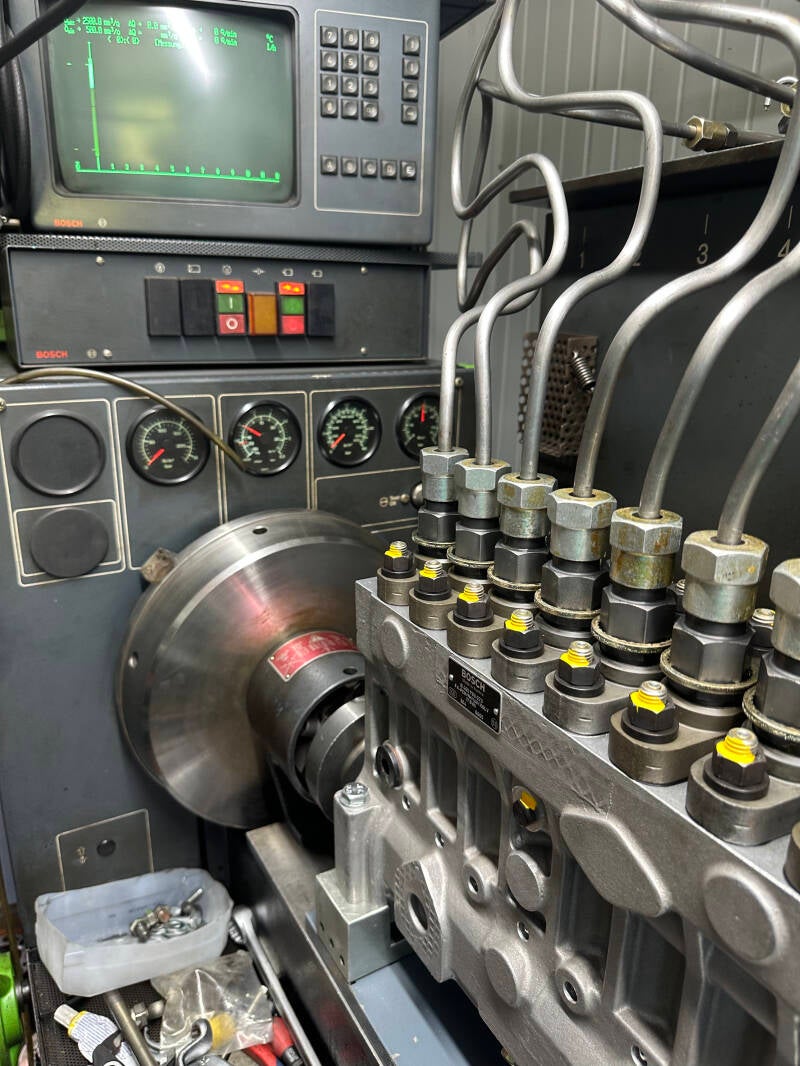
After the individual pump work, both pumps were tested together on the dedicated 16-cylinder arrangement. Direct volumetric measurement with graduated glasses allowed the complete system to be compared cylinder by cylinder. The coupled test showed that further correction was required after the individual calibration - exactly the type of system-level difference that cannot be identified when the two pumps are evaluated separately only.
Why the Case Study Matters
Large V-engines with multiple mechanical pumps can behave as one fuel-injection system even though the pumps can be removed and tested individually. For suitable mechanically coupled systems, final comparison of both pump halves can therefore provide valuable information about delivery balance and synchronisation across the complete engine.
Fixed-Speed and Variable-Speed Project Work
The same principle of application-specific testing applies beyond this V16 project. A fixed-speed generator engine and a variable-speed propulsion engine can require different test points and documentation. We therefore define the test programme from the engine duty, available technical data and pump design.
Future Case Studies: Bosch, LÓrange, Kugelfischer and Other Systems
Our marine programme is not limited to Bosch P10. Suitable mechanical pumps from Bosch, LÓrange, Kugelfischer and other manufacturers can be evaluated for future documented projects. Only completed and technically documented work should be presented publicly as a reference; enquiries for other pump types are assessed individually before acceptance.
What We Document in a Marine Case Study
- engine and injection-pump identification
- initial condition and technical problem
- relevant wear or damage findings
- repair and replacement scope
- test data used as the technical basis
- test-bench method and measurement arrangement
- technical result of the workshop verification
Do You Have a Similar Marine Injection Project?
Send us photographs of the complete pump arrangement, all nameplates and the engine information. For V-engines and tandem systems, photographs showing how the pumps are mechanically connected are particularly useful.