MWM/Deutz TBD620 and TCD2020 Fuel Injection Pump Repair, Rebuild and Inspection
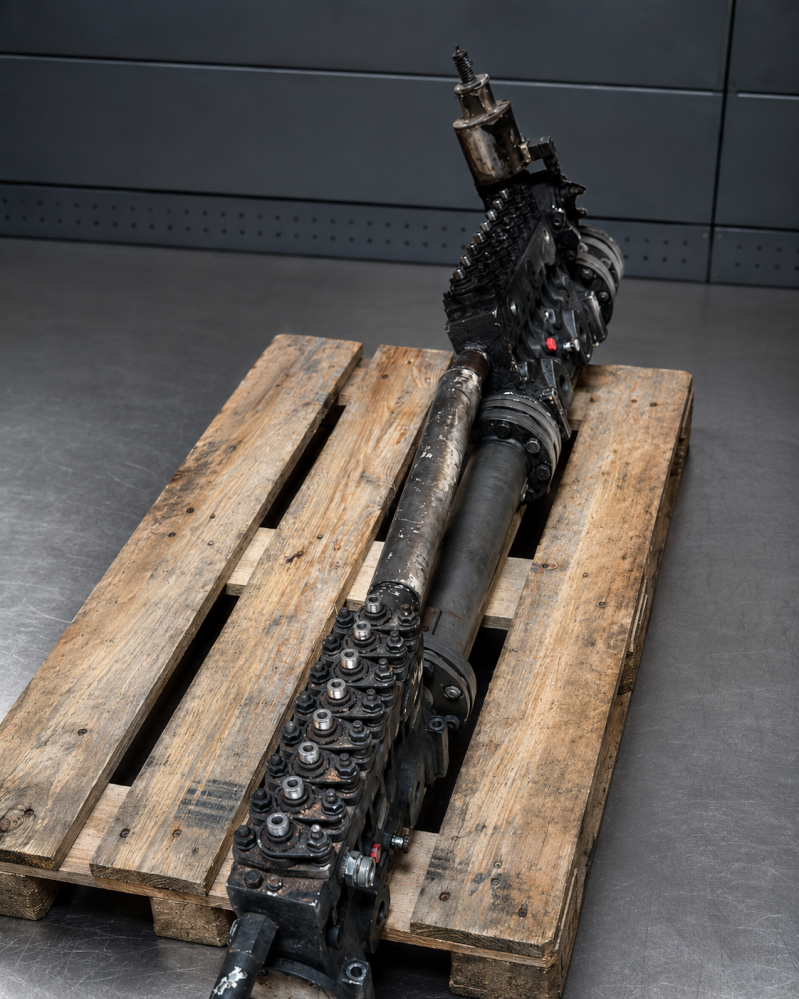
MWM/Deutz TBD620 and TCD2020 Fuel Injection Pumps
Specialist Overhaul, Repair, Calibration and Spare-Parts Support for Bosch P9 and P10 Inline Injection Pumps
The MWM/Deutz TBD620 and TCD2020 engine families are large high-performance diesel engines used in marine propulsion, power generation, industrial installations and stationary applications.
Depending on engine configuration, cylinder count, power rating, rated speed and technical production status, different mechanical Bosch inline fuel injection pumps were used throughout these engine families.
For TBD620 and TCD2020 V8, V12 and V16 engines, both Bosch P10 and Bosch P9 injection-pump systems can be encountered depending on the individual engine configuration.
The engine designation alone is therefore not sufficient to identify the correct injection pump.
For reliable technical identification, the complete combination of the following information is required:
- complete Bosch pump designation
- Bosch part number
- MWM/Deutz part number
- exact engine model
- engine serial number
- number of cylinders
- rated engine output
- rated engine speed
- application
- and technical pump configuration
Einspritzpumpen Manufaktur NRW specialises in the complete overhaul, dimensional inspection, spare-parts support and test-bench calibration of these mechanical large-diesel injection pumps.
Our specialist work includes:
MWM/Deutz TBD620 V8
MWM/Deutz TBD620 V12
MWM/Deutz TBD620 V16
MWM/Deutz TCD2020 V8
MWM/Deutz TCD2020 V12
MWM/Deutz TCD2020 V16
as well as complete V16 injection-pump pairs and tandem pump assemblies.
Based in North Rhine-Westphalia, Germany – supporting marine, industrial and power-generation customers throughout Europe and worldwide.
TBD620 and TCD2020 – Similar Engines Do Not Automatically Use the Same Injection Pump
One of the most important aspects of these engine families is the number of different injection-pump configurations.
Two injection pumps may appear almost identical externally while being considerably different internally.
Differences may include:
- pumping elements
- plunger diameter
- fuel-delivery quantity
- camshaft
- cam profile
- direction of rotation
- drive arrangement
- control mechanism
- coupling
- rated pump speed
- fuel-delivery characteristic
- and test-bench calibration
For this reason, an injection pump must never be identified, rebuilt or calibrated solely on the basis of its external appearance.
Our basic principle is:
The complete pump identification determines the technical configuration and the correct calibration specification.
Bosch P10 Injection Pumps for TBD620 and TCD2020
Different Bosch P10 inline injection pumps are used within the TBD620 and TCD2020 engine families.
Relevant pump type designations include:
PE8/10/150/100LS50
PE8/10/150/100LS51
PE8/10/150/100LS52
PE8/10/150/100LS53
as well as further configurations for different cylinder counts and engine power ratings.
Although these pumps can appear very similar externally, their internal specification and calibration may differ substantially.
They must therefore not be considered interchangeable without technical verification.
PE8/10/150/100LS50
Bosch:
9 410 365 828
Alternative search format:
9410365828
MWM/Deutz:
12302170
Alternative formats:
1230 2170
1230-2170
This combination belongs to the known P10 configurations used within this large-engine family.
PE8/10/150/100LS51
Bosch:
9 410 365 829
Alternative search format:
9410365829
MWM/Deutz:
12302171
Alternative formats:
1230 2171
1230-2171
The LS50 and LS51 versions demonstrate why even a small difference within a complete Bosch type designation can be technically significant.
For spare-parts identification and calibration, the full designation must always be considered.
PE8/10/150/100LS52
Bosch:
9 410 365 831
Alternative search format:
9410365831
MWM/Deutz:
12302838
Alternative formats:
1230 2838
1230-2838
PE8/10/150/100LS53
Bosch:
9 410 365 832
Alternative search format:
9410365832
MWM/Deutz:
12302839
Alternative formats:
1230 2839
1230-2839
Particularly with closely related LS52 and LS53 pumps, precise identification is essential.
Historical spare-parts documentation, old inventories and aftermarket listings may use different number formats.
For this reason, we do not rely on one isolated number.
We evaluate the complete combination of:
Bosch pump type
Bosch part number
MWM/Deutz reference
and:
engine identification
Further Bosch P10 Configurations
The P10 system used within the TBD620 family is not limited to the PE8 pump versions.
A relevant twelve-cylinder version is:
FA-PE12/10M/150/100LS54
Bosch:
9 410 365 018
Alternative search format:
9410365018
MWM/Deutz:
12137109
This illustrates the wide range of P10 pump configurations used across different engine versions.
Depending on the application, differences may include:
- number of pumping elements
- element specification
- pump housing
- camshaft
- fuel-delivery range
- drive configuration
- and calibration data
Bosch P9 Injection Pumps for Higher-Output TBD620 and TCD2020 Applications
Higher-output versions of the TBD620 and TCD2020 engine families can also use larger Bosch P9 inline injection pumps.
Relevant pump types within our specialist work include:
FA-PE8/9M/160/100/LV
Alternative search format:
FAPE89M160100LV
and:
FA-PE8/9M/180/100S24
Alternative search format:
FAPE89M180100S24
These are mechanically robust high-capacity injection pumps designed for demanding large-diesel applications.
Their construction, internal dimensions and fuel-delivery capability differ considerably from smaller inline injection pumps.
Relevant Bosch references include:
B 405 980 021
B405980021
B 405 980 022
B405980022
B 405 980 023
B405980023
B 405 980 024
B405980024
MWM/Deutz references encountered within this field include:
12305948
12305950
12306782
12306784
12305942
12305944
The final assignment of any individual part number to a specific TBD620 or TCD2020 engine is always carried out using the complete pump and engine identification.
A part number is not considered directly interchangeable simply because it appears within the same engine family.
P9 or P10 – Engine Model Alone Is Not Sufficient
One of the most important characteristics of the TBD620 and TCD2020 families is that the engine designation alone does not determine the installed injection-pump system.
Depending on:
- engine power
- number of cylinders
- rated speed
- application
- production status
- and technical specification
different Bosch injection-pump systems can be installed.
For this reason, every overhaul begins with exact identification.
A clear photograph of the pump nameplate can often provide more useful information than a general statement such as:
“TBD620 V16 injection pump.”
For a reliable technical assessment, we require as much of the following information as possible:
- complete Bosch pump designation
- Bosch part number
- MWM/Deutz part number
- exact engine designation
- engine serial number
- number of cylinders
- rated output
- rated speed
- and application
TBD620 V16 and TCD2020 V16
Two Injection Pumps – One Complete V16 Fuel Injection System
On various V16 applications, two injection pumps operate together on the same engine.
From a technical perspective, they should therefore not automatically be regarded as two completely independent units.
Both pumps must ultimately:
- deliver the correct fuel quantity
- operate with comparable cylinder-to-cylinder delivery
- be correctly positioned mechanically
- respond consistently to control movement
- and work together within the specified engine operating range
Two injection pumps that function correctly when tested individually do not automatically form a correctly matched V16 injection system.
Differences may result from:
- different levels of wear
- different previous repair histories
- different pumping elements
- coupling tolerances
- drive-system backlash
- incorrect basic position
- differences in control travel
- and unequal fuel delivery
For this reason, wherever technically possible, we assess both V16 injection pumps together.
16-Cylinder Fuel Injection Pump Test Bench
Complete Testing and Synchronisation Using 16 Graduated Measuring Cylinders
For large V16 injection systems, Einspritzpumpen Manufaktur NRW operates a specially configured 16-cylinder injection pump test bench with 16 individual graduated measuring cylinders.
The test bench is designed for large mechanical inline injection pumps and complete tandem pump systems.
Its configuration includes:
- high-capacity drive system
- increased rotating mass
- extended pump bed
- mounting capability for large inline injection pumps
- volumetric fuel-delivery measurement
- up to 16 separate measuring positions
- testing of coupled pump assemblies
- and synchronisation of complete V16 systems
Following mechanical overhaul, both injection pumps can initially be tested and calibrated individually.
Suitable pump pairs can then be:
- mechanically connected
- operated together
- matched to one another
- synchronised
- and compared across all 16 pumping elements
16 Measuring Cylinders – 16 Individual Delivery Quantities
Each pumping element ultimately supplies one individual engine cylinder.
On our test bench, every pumping element can therefore be assigned to a separate volumetric measuring position.
This allows direct comparison of:
Pump I – element by element
Pump II – element by element
Pump I compared with Pump II
and:
all 16 pumping elements together
Depending on the pump configuration and available calibration specification, we can assess:
- absolute delivery quantity
- delivery variation
- repeatability
- behaviour at different test speeds
- response to adjustment
- control movement
- and synchronisation between both pumps
Our objective is not simply:
two repaired injection pumps.
Our objective is:
a technically matched fuel injection system for the complete V16 engine.
Why Equal Fuel Delivery Matters
Unequal fuel delivery results in different combustion conditions between individual cylinders.
Possible consequences include:
- unequal cylinder output
- different exhaust-gas temperatures
- uneven thermal loading
- irregular engine operation
- smoke
- increased fuel consumption
- poor load response
- unequal mechanical loading
- and increased long-term engine wear
For marine propulsion and power-generation applications in particular, balanced cylinder loading is an important factor in reliable engine operation.
Test-bench calibration is therefore not simply about producing a certain maximum fuel quantity.
The actual objective is:
repeatable, balanced and engine-specific fuel delivery across the complete injection system.
Our TBD620 and TCD2020 Injection Pump Overhaul Process
1. Technical Identification
Before dismantling, we record:
- complete Bosch pump designation
- Bosch part number
- MWM/Deutz part number
- engine model
- engine serial number
- number of cylinders
- rated output
- rated speed
- direction of rotation
- application
- individual pump or complete pump pair
- and available calibration documentation
For a V16 system, both pumps are documented individually.
2. Complete Dismantling
The injection pump is completely dismantled into its functional assemblies.
Depending on the exact pump type, components inspected include:
- pump housing
- pumping elements
- plungers
- barrels
- delivery valves
- delivery-valve holders
- camshaft
- cam profiles
- rollers
- roller tappets
- bearings
- tappet pins
- shafts
- bushes
- control mechanism
- springs
- actuating components
- pump drive
- couplings
- sealing surfaces
- and housing fits
3. Cleaning, Inspection and Precision Measurement
After complete cleaning, all relevant components are technically assessed.
Particular attention is paid to:
- pumping-element wear
- internal leakage
- corrosion
- surface condition
- camshaft wear
- cam profiles
- roller wear
- roller-tappet wear
- bearing clearance
- delivery valves
- control mechanism
- fits
- and evidence of previous repairs
A component is not considered serviceable simply because it appears visually acceptable.
The decisive criteria are:
dimensional accuracy, surface condition, wear and actual technical function.
4. Spare-Parts Support for Legacy Large-Diesel Injection Pumps
Spare-parts availability for many historical large-diesel injection pumps is becoming increasingly difficult.
Certain original components may be:
- discontinued
- available only in limited quantities
- available only as New Old Stock
- or no longer commercially available at all
Depending on the individual project, we therefore work with:
- our own stock
- original components
- historical inventories
- New Old Stock
- used reference components
- complete donor pumps
- technical documentation
- and specialised manufacturing partners
A vessel, generator or power-generation engine should not necessarily become unusable simply because one individual injection-pump component is no longer available through normal supply channels.
5. Reverse Engineering of Obsolete Injection-Pump Components
Where an essential pump component is no longer available, we assess whether technical reconstruction and reproduction are feasible.
Depending on the project, we source:
- used original components
- New Old Stock
- damaged reference parts
- comparison components
- historical drawings
- old spare-parts documentation
- and available manufacturer information
These components can then be:
- dismantled
- precisely measured
- evaluated for material properties
- analysed technically
- digitally reconstructed
- prototyped
- tested
- and manufactured as individual replacement parts or small production batches
Depending on component function, we consider:
- material
- hardness
- heat treatment
- fit
- wear behaviour
- surface quality
- mechanical loading
- manufacturing tolerances
- and long-term operational reliability
Our objective is not to create a visual copy of an old part.
The replacement component must perform correctly within the complete injection pump.
6. Assembly and Basic Adjustment
After all components have been inspected and repaired, the injection pump is carefully reassembled.
Depending on pump type, the process includes verification of:
- correct pumping-element assignment
- delivery valves
- camshaft position
- roller tappets
- bearing clearances
- control mechanism
- basic settings
- lubrication
- coupling
- sealing
- and pump-specific adjustment values
7. Test-Bench Calibration
Following mechanical overhaul, the injection pump is operated on the appropriate test bench.
Depending on pump type and available calibration specification, testing may include:
- delivery quantity of every pumping element
- element-to-element balance
- different test speeds
- repeatability
- control travel
- shut-off behaviour
- leakage
- mechanical operation
- and pump-specific target values
Calibration values are not transferred from a pump merely because it appears externally similar.
The pump is calibrated according to the technical specification of the actual injection-pump configuration.
Fuel Injection Pump and Injectors Must Work Together
A correctly calibrated injection pump can only perform properly when the injectors and nozzle-holder assemblies are also suitable for the actual engine configuration.
TBD620 and TCD2020 engines use different versions of:
- nozzle holders
- complete nozzle-holder assemblies
- injector nozzles
- retaining nuts
- nozzle protection tubes
- and related components
In cases involving:
- unequal exhaust-gas temperatures
- smoke
- cylinder-to-cylinder imbalance
- extended periods of inactivity
- unknown service history
- or complete engine overhaul
we recommend considering the complete mechanical fuel injection system rather than only the injection pump.
Typical Damage and Wear
Typical findings on TBD620 and TCD2020 injection pumps include:
- worn pumping elements
- excessive internal leakage
- damaged delivery valves
- corrosion
- damage after long periods of inactivity
- seized plungers
- restricted control mechanisms
- camshaft wear
- damaged cam profiles
- roller wear
- roller-tappet wear
- bearing damage
- excessive bearing clearance
- damaged springs
- coupling damage
- fuel leakage
- oil leakage
- incorrect combinations of internal components
- damage caused by previous improper repairs
- and unequal fuel-delivery quantities
On V16 systems, an additional point must always be considered:
Do both injection pumps still match one another technically?
Frequently Searched Pump Types and Part Numbers
Bosch P10
PE8/10/150/100LS50
Bosch:
9 410 365 828
9410365828
MWM/Deutz:
12302170
1230 2170
1230-2170
PE8/10/150/100LS51
Bosch:
9 410 365 829
9410365829
MWM/Deutz:
12302171
1230 2171
1230-2171
PE8/10/150/100LS52
Bosch:
9 410 365 831
9410365831
MWM/Deutz:
12302838
1230 2838
1230-2838
PE8/10/150/100LS53
Bosch:
9 410 365 832
9410365832
MWM/Deutz:
12302839
1230 2839
1230-2839
FA-PE12/10M/150/100LS54
Bosch:
9 410 365 018
9410365018
MWM/Deutz:
12137109
Bosch P9 – Relevant Pump Types
Relevant pump types within this specialist field include:
FA-PE8/9M/160/100/LV
FAPE89M160100LV
and:
FA-PE8/9M/180/100S24
FAPE89M180100S24
Relevant Bosch references include:
B 405 980 021 / B405980021
B 405 980 022 / B405980022
B 405 980 023 / B405980023
B 405 980 024 / B405980024
MWM/Deutz references encountered within these applications include:
12305948
12305950
12306782
12306784
12305942
12305944
Final identification is always based on the complete pump and engine configuration.
Why Professional Overhaul Can Still Make Economic Sense
Many TBD620 and TCD2020 engines remain in service in technically important installations worldwide.
Typical applications include:
- marine vessels
- generator installations
- power stations
- emergency power systems
- industrial plants
- pumping installations
- and stationary power-generation systems
In many cases, the complete engine is not technically worn out.
The actual problem may be:
one injection pump or one obsolete individual component.
Replacing the complete engine can create significantly greater technical and commercial consequences.
Possible additional work may include:
- engine foundation modification
- generator or gearbox adaptation
- cooling-system modification
- exhaust-system changes
- fuel-system changes
- electrical modifications
- control-system integration
- monitoring-system changes
- documentation
- certification
- and extended plant downtime
For operators, technical purchasing departments and asset managers, professional overhaul of the existing fuel injection system can therefore represent a highly attractive alternative to replacement of the complete engine installation.
Every project is assessed individually with regard to technical feasibility and economic value.
International Support for Marine, Industrial and Power-Generation Customers
Our services are intended for:
- shipping companies
- vessel operators
- shipyards
- marine-engine service companies
- power-generation companies
- generator operators
- industrial companies
- engine rebuilders
- diesel injection specialists
- technical purchasing departments
- spare-parts organisations
- and operators of legacy MWM/Deutz large diesel engines
International enquiries are welcome.
Injection pumps and individual components can be sent to our workshop in Germany by prior arrangement.
For an initial technical assessment, photographs and complete pump identification are usually the best starting point.
Information Required for an Initial Assessment
Please provide as much of the following information as possible.
Engine Information
- complete engine designation
- engine serial number
- V8 / V12 / V16
- rated engine output
- rated engine speed
- application
Injection Pump Information
- complete Bosch pump designation
- Bosch part number
- MWM/Deutz part number
- direction of rotation
- individual pump or pump pair
- clear photographs of all nameplates
Additional Information
- photographs of the complete injection pump
- photographs of the drive side
- description of the problem
- information about previous repairs
- available Bosch, MWM or Deutz technical documentation
For a V16 engine, we recommend submitting both injection pumps together wherever technically and logistically possible.
Frequently Asked Questions
Which Injection Pump Is Installed on My TBD620?
That depends on the exact engine configuration, power rating, rated speed and technical production status.
The engine designation alone is not sufficient for reliable identification.
Please send us a clear photograph of the injection-pump nameplate.
Which Injection Pump Is Installed on My TCD2020?
Different pump versions are also used within the TCD2020 family.
Complete pump and engine data are required for correct technical identification.
Do You Overhaul Bosch P9 Injection Pumps for TBD620 and TCD2020 Engines?
Yes.
Bosch P9 injection pumps for these large-diesel applications form an important part of our specialist work.
The pump is completely dismantled, measured, technically assessed, overhauled and subsequently calibrated on appropriate test-bench equipment.
Do You Overhaul Bosch P10 Injection Pumps for TBD620 and TCD2020 Engines?
Yes.
Different P10 configurations from these engine families can be identified, overhauled and tested in our workshop.
Can Both V16 Injection Pumps Be Tested Together?
Yes, provided that the specific pump configuration can be mounted and driven on our test bench.
The pumps can initially be tested individually and subsequently operated and synchronised as a complete pump system.
Why Should Both Injection Pumps from a V16 Engine Be Submitted Together?
Because this allows us to determine whether both pumps truly match one another in terms of:
- fuel delivery
- control movement
- basic mechanical position
- wear condition
- and synchronisation
For a V16 system, the interaction between both pumps is as important as the condition of each individual pump.
Can Obsolete Injection-Pump Components Be Reproduced?
Depending on component design and technical feasibility, yes.
We first investigate:
- available original parts
- New Old Stock
- historical inventories
- and used reference components
Where no suitable replacement is available, selected components can be reverse engineered and manufactured again.
Request a TBD620 / TCD2020 Injection Pump Assessment
Do you operate an:
MWM/Deutz TBD620 V8
MWM/Deutz TBD620 V12
MWM/Deutz TBD620 V16
MWM/Deutz TCD2020 V8
MWM/Deutz TCD2020 V12
or:
MWM/Deutz TCD2020 V16
and require injection-pump repair, overhaul, calibration or technical assessment?
Please send us:
- exact engine designation
- engine serial number
- number of cylinders
- rated engine output
- rated engine speed
- complete Bosch pump designation
- Bosch part number
- MWM/Deutz part number
- photographs of all pump nameplates
- photographs of the complete injection pump
- description of the fault
- and available technical documentation
After reviewing the information, we can identify the pump configuration and assess the required overhaul, spare-parts and test-bench work.
Einspritzpumpen Manufaktur NRW
Specialist for MWM/Deutz TBD620 and TCD2020 Fuel Injection Systems
Our services include:
TBD620 V8 Injection Pump Overhaul
TBD620 V12 Injection Pump Overhaul
TBD620 V16 Injection Pump Overhaul
TCD2020 V8 Injection Pump Overhaul
TCD2020 V12 Injection Pump Overhaul
TCD2020 V16 Injection Pump Overhaul
Bosch P9 Fuel Injection Pump Repair
Bosch P10 Fuel Injection Pump Repair
Complete Dismantling and Technical Inspection
Precision Measurement of Pumping Elements and Components
Delivery-Valve Inspection
Camshaft and Roller-Tappet Inspection
Spare-Parts Sourcing
Test-Bench Calibration
Cylinder-to-Cylinder Fuel-Delivery Balancing
16-Cylinder Testing with 16 Graduated Measuring Cylinders
Synchronisation of Complete V16 Injection Pump Systems
Reverse Engineering
Reproduction of Obsolete Injection-Pump Components
From an individual worn pumping element to a complete mechanically coupled V16 pump system, we assess the fuel injection equipment as part of the actual TBD620 or TCD2020 engine configuration – not as an isolated component.